Clara Long · 26 October 2026
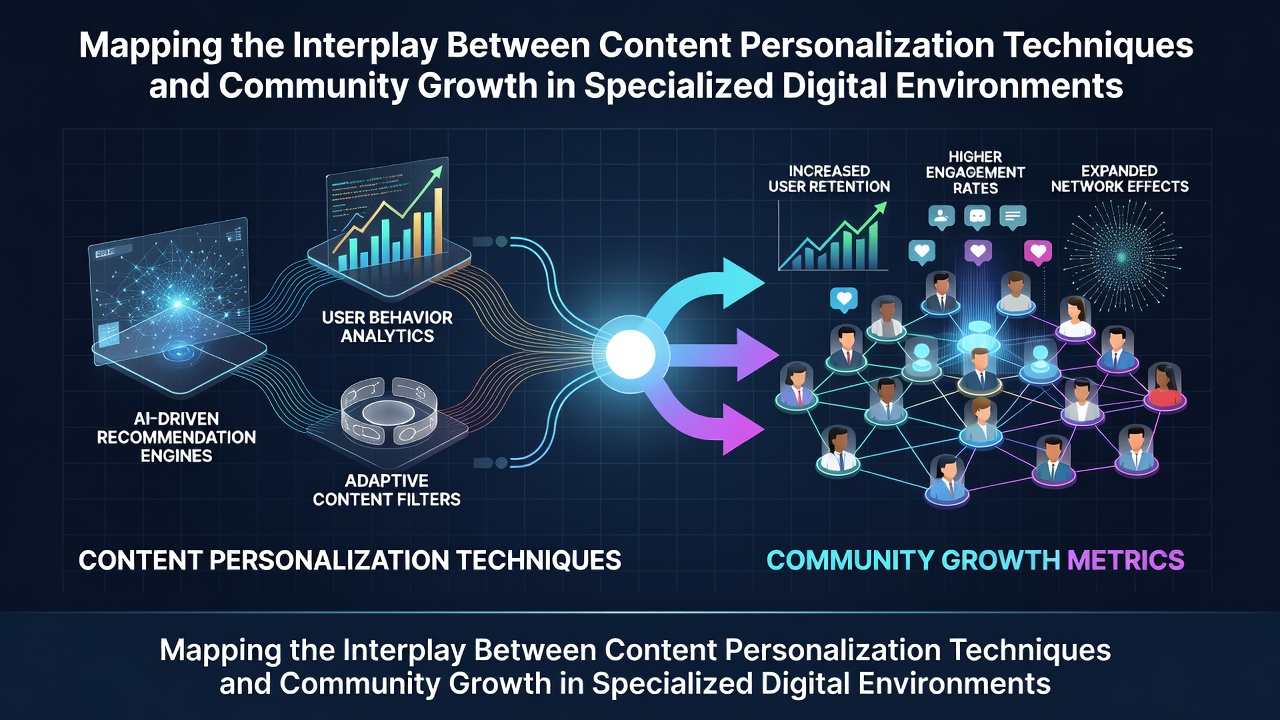
Mapping the Interplay Between Content Personalization Techniques and Community Growth in Specialized Digital Environments
Specialized digital environments rely on content personalization techniques that adapt recommendations to individual user preferences while shaping overall community expansion, and researchers track these dynamics through engagement metrics collected across platforms in various sectors. Data from multiple studies shows that algorithms using collaborative filtering and behavioral signals can increase session duration by aligning suggested material with past interactions, yet the same processes sometimes limit exposure to new topics that might attract broader participation.
Techniques such as content-based filtering draw from user-generated tags and metadata to surface similar items, and platform operators report that these methods correlate with higher retention rates in niche forums focused on topics like technology development or hobbyist collections. In October 2026, figures released by the Australian Communications and Media Authority indicated that communities employing hybrid personalization models experienced average membership growth of 18 percent over six-month periods, while those using purely rule-based systems showed slower expansion.
Core Personalization Mechanisms and Their Data Foundations
Collaborative filtering aggregates anonymous user data to predict preferences, and analysts note that this approach often accelerates initial onboarding because new members receive suggestions drawn from similar profiles within the same specialized group. Machine learning models trained on interaction histories further refine outputs by weighting recent activity more heavily, which helps sustain momentum once users pass the first few visits. Observers point out that these systems require substantial datasets before they stabilize, and smaller communities sometimes face delays in achieving reliable personalization until critical mass is reached.
Content-based methods analyze item attributes such as keywords and categories, and they complement collaborative approaches by ensuring that even isolated users encounter material aligned with their stated interests. Studies from research institutions in Canada have documented that platforms combining both techniques reduce bounce rates more effectively than single-method implementations, particularly in environments where members discuss technical subjects or creative pursuits.
Links Between Personalization Outputs and Membership Expansion
Community growth depends on the ability of personalization systems to introduce members to relevant subgroups, and metrics such as referral rates and repeat visits serve as indicators of success. When algorithms prioritize highly engaged clusters, new arrivals may connect quickly with active participants, yet this concentration can also create echo effects that discourage exploration of adjacent topics. Evidence from longitudinal tracking reveals that communities achieving balanced personalization see steadier inflows of diverse participants over time.
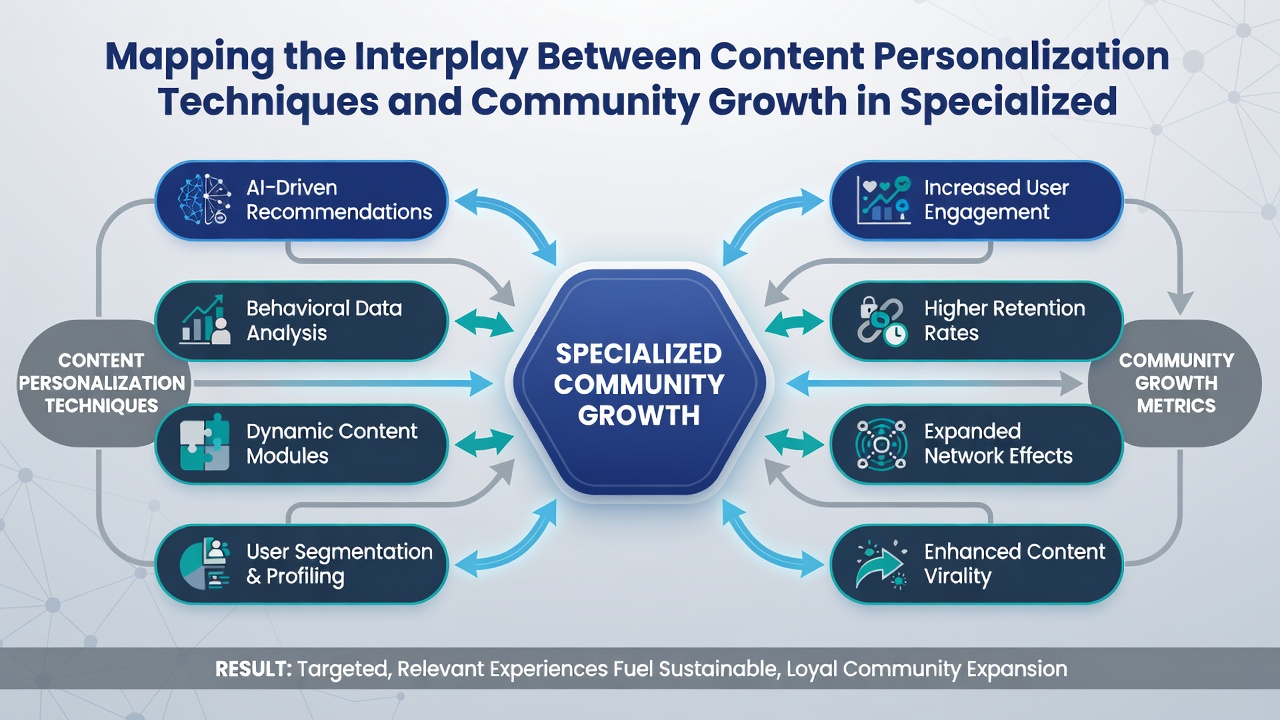
Platform administrators adjust weighting factors in recommendation engines to test impacts on network size, and results from controlled experiments show that moderate personalization levels support both retention and recruitment. Excessive narrowing of content feeds, by contrast, tends to flatten growth curves once core members saturate their immediate interest areas. Researchers at European academic centers have compiled datasets indicating that communities maintaining some degree of serendipitous exposure alongside targeted suggestions record higher long-term member counts.
Measurement Approaches Used Across Platforms
Analysts employ cohort analysis and network mapping to quantify how personalization influences community structure, and these methods reveal patterns in connection formation that simple engagement scores overlook. Time-series data collected at regular intervals allows comparison of growth trajectories before and after algorithm updates, while A/B testing isolates the contribution of specific personalization features. Reports from Statistics Canada highlight that platforms publishing transparent methodology around these measurements attract greater trust from participants, which in turn supports organic expansion through word-of-mouth channels.
Key performance indicators include not only total membership but also subgroup diversity and cross-topic interaction rates, and specialists emphasize that these secondary metrics often predict sustainability more accurately than headline numbers alone. In specialized environments, where topic focus remains narrow by design, personalization must balance depth with enough breadth to prevent stagnation.
Conclusion
Mapping the interplay between personalization techniques and community growth requires ongoing collection of granular interaction data alongside structural network indicators, and findings across regions demonstrate that hybrid approaches tend to support more consistent expansion than narrowly focused alternatives. Continued refinement of these systems, informed by empirical observations from diverse digital environments, provides the foundation for understanding how tailored content delivery shapes membership dynamics over extended periods.