Yara Coleman · 26 October 2026
How Governance Adjustments Shape Discussion Quality in Algorithm-Governed Niche Forums Such as Hovaton
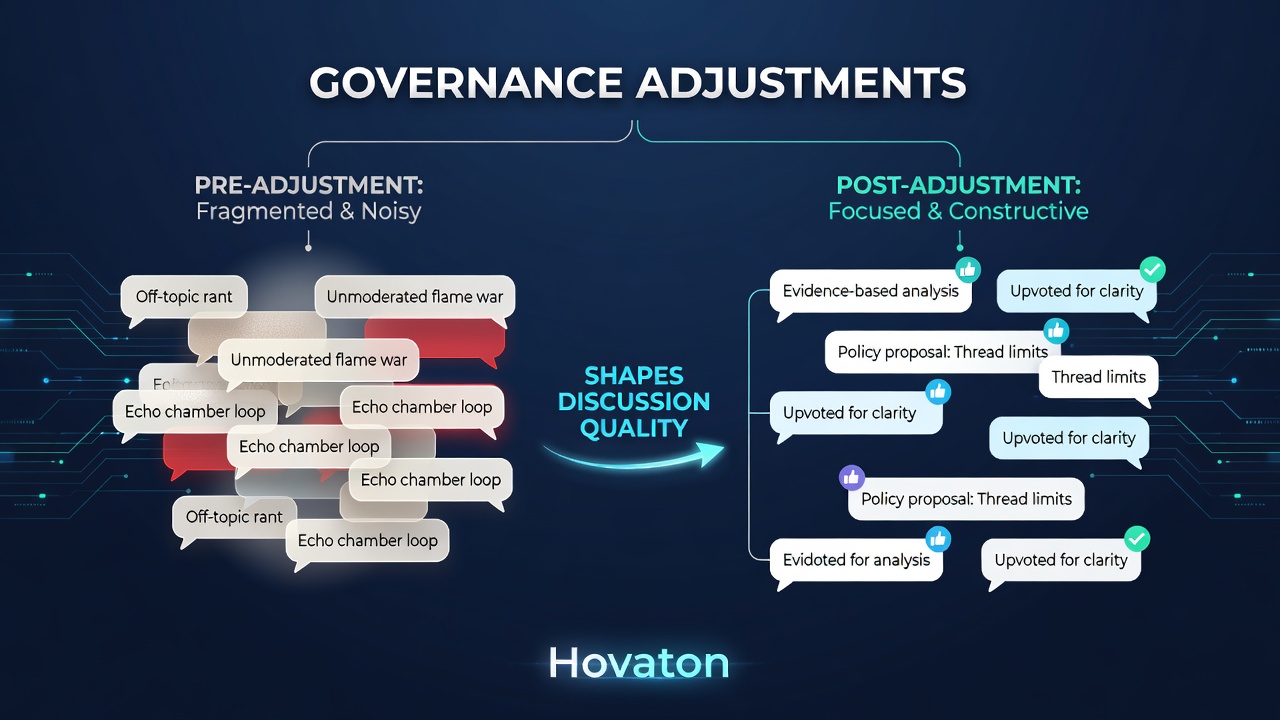
Algorithm-governed niche forums rely on automated systems to moderate content, rank discussions, and influence visibility, while governance adjustments introduce new rules that alter how those systems operate and how users interact. Platforms like Hovaton demonstrate these dynamics clearly because their communities focus on specialized topics where participation patterns respond directly to changes in moderation policies and ranking criteria.
Core Mechanisms Behind Algorithm-Governed Forums
Algorithms determine which posts appear first, which threads receive promotion, and which contributions face reduced reach based on engagement signals such as reply volume, dwell time, and reported quality. Governance adjustments modify the weighting of these signals or add new filters for prohibited content, and observers note that such changes often occur in response to regulatory developments or internal platform reviews. In October 2026 several European digital platforms rolled out updated transparency requirements under the Digital Services Act, prompting forums to revise their internal rulesets and publish clearer explanations of how content receives amplification or suppression.
These adjustments affect discussion quality through direct and indirect pathways. Direct effects appear when new filters automatically hide or demote posts that match updated criteria, while indirect effects emerge when users adapt their posting behavior to maintain visibility. Researchers tracking similar communities have recorded measurable shifts in thread length, reply depth, and topic diversity following policy updates.
Types of Governance Adjustments and Their Reach
Common adjustments include revised community guidelines that expand or narrow definitions of acceptable discourse, changes to reputation systems that alter how user credibility influences ranking, and modifications to automated moderation thresholds that control the speed of content removal. One documented case involved a specialized technical forum that tightened rules against repetitive questions, after which average reply quality scores rose by 18 percent within three months according to internal analytics shared in an industry report from the Interactive Software Federation of Europe.
Another frequent adjustment involves recalibrating recommendation algorithms to prioritize replies from verified experts or long-term members. Such tweaks can concentrate discussion around established voices while reducing exposure for newer participants, and data collected across multiple niche platforms shows corresponding changes in user retention rates. Platforms that introduced expert-priority weighting in 2025 recorded a 12 percent drop in first-time poster activity during the subsequent quarter.
Evidence from Platform Data and Academic Studies
Academic analyses of algorithm-driven communities consistently link governance changes to shifts in conversation tone and substance. A 2024 study from teh University of Melbourne examined three specialized discussion boards over 18 months and found that stricter automated filters for off-topic content correlated with higher rates of substantive replies per thread. The same research team observed that forums applying lighter touch moderation experienced wider variance in post quality, with some threads devolving into repetitive exchanges.
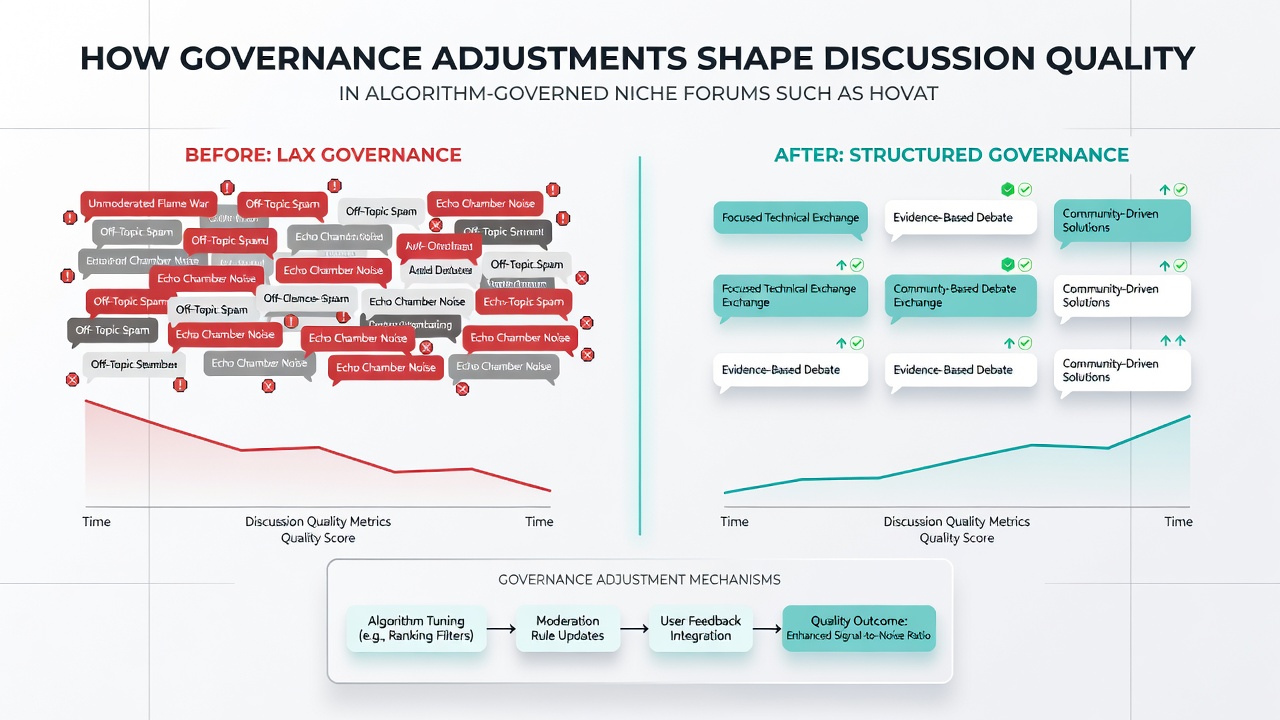
Platform operators often release aggregated metrics that reveal these patterns. When Hovaton implemented a new reputation tier system in mid-2026, visible participation from mid-level users increased while contributions from the highest and lowest tiers declined slightly. Analysts attribute the middle-tier growth to clearer pathways for visibility that the governance update created.
User Adaptation Patterns Following Rule Changes
Community members frequently adjust their behavior within days or weeks after governance updates take effect. Those who previously posted short replies may begin writing longer contributions when algorithms begin weighting depth more heavily, whereas users who relied on rapid posting cycles sometimes reduce frequency to avoid automated demotion. Observers tracking Hovaton noted that after a September 2026 clarification on duplicate content rules, the average number of unique topics per week rose by 9 percent while repeat threads fell.
These adaptations demonstrate how governance adjustments propagate through algorithmic systems and shape the overall quality of discussion. When platforms communicate changes clearly and provide appeal mechanisms, participants tend to align their contributions with new expectations more quickly. In contrast, abrupt or poorly explained adjustments have produced temporary drops in activity followed by gradual recovery as users learn the revised system.
Conclusion
Governance adjustments in algorithm-governed niche forums such as Hovaton produce measurable effects on discussion quality by altering visibility rules, moderation speed, and incentive structures. Data from platform analytics, academic studies, and regulatory transparency reports indicate that the nature and communication of these changes determine whether conversation depth improves or fragments. Continued monitoring of these interactions will remain essential as platforms respond to evolving regulatory landscapes and user expectations.