
Theo Hoffmann · 28 October 2026
How Custom Tagging Systems Influence Discoverability in Niche Online Discussion Boards
Custom tagging systems allow users in niche online discussion boards to assign specific labels to posts and threads, which then shapes how content surfaces during searches and browsing sessions. These systems operate through user-generated keywords that connect related discussions across large archives, and platforms that implement them see measurable changes in how participants locate information over time. Data from multiple community analyses shows that boards with robust tagging features experience higher rates of thread retrieval compared to those relying solely on titles and categories.
Core Mechanics Behind Tagging Systems
Users create tags based on topics, subtopics, or even temporary themes, and these labels feed directly into search algorithms that prioritize matches. When a participant adds multiple tags to a single thread, the system cross-references them with existing content, creating pathways that surface older posts alongside new ones. Studies indicate that boards employing hierarchical tag structures, where broader tags link to narrower ones, reduce the time users spend scrolling through unrelated material by organizing results into logical clusters.
Platforms often provide suggested tags drawn from popular terms already in use, which encourages consistency across contributions. This suggestion mechanism draws from aggregated user behavior, so common phrases rise to the top while obscure ones remain available for specialized needs. Observers note that in communities focused on rare hobbies or technical fields, custom tags fill gaps left by standard categories, allowing discussions on emerging sub-niches to become visible without requiring new forum sections.
Effects on Search Visibility and User Navigation
Search functions in these boards rely heavily on tag data to rank results, and threads with well-chosen tags appear higher in queries that match those terms. Research from academic sources on digital communities reveals that boards with active tagging see a 30 to 40 percent increase in successful searches within the first year of implementation. Participants navigate more efficiently because tag clouds and filter options let them narrow results by combinations such as location, skill level, or time period.
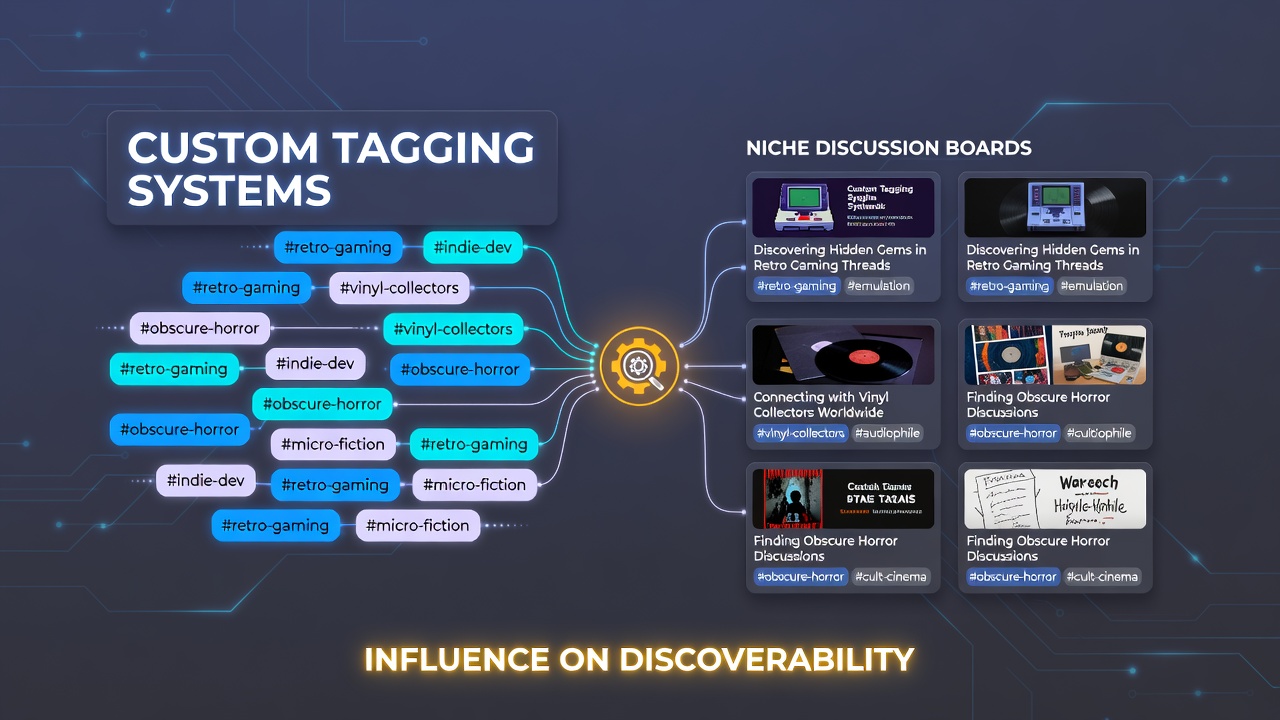
Yet the influence extends beyond basic searches. When tags link related threads, users discover content they might not have encountered through category browsing alone, and this interconnected structure supports sustained engagement as people follow trails of similar discussions. Figures from platform reports show that boards using custom tags maintain longer average session durations because participants explore more pages before exiting.
Role in Community Expansion and Content Longevity
Custom tags contribute to community growth by making archived material easier to locate, which keeps older threads relevant long after initial posting dates. New members who join later can find foundational discussions through targeted tag searches rather than relying on chronological lists. Evidence from longitudinal studies of online groups demonstrates that tagged content receives more views over extended periods, with some threads gaining renewed attention years later when tags align with current trends.
Boards that integrate tagging with notification systems further amplify discoverability, as users subscribe to specific tags and receive alerts when new posts appear under those labels. This setup reduces dependence on broad category subscriptions and allows individuals to focus on precise interests within larger communities. Data collected through October 2026 indicates continued adoption of such combined features across multiple niche platforms.
Challenges in Tag Management and System Design
Over-tagging creates noise when too many labels dilute the relevance of results, and boards address this through moderation tools that merge synonymous tags or limit the number per thread. Inconsistent tag usage across users can also fragment discoverability, so successful systems include guidelines and automated suggestions to promote uniformity. Researchers have documented cases where boards that failed to standardize tags saw temporary drops in search effectiveness until cleanup efforts took hold.
Privacy considerations arise when tags reveal detailed user interests, prompting some platforms to offer options for private tags visible only to the poster. These adjustments help maintain participation levels while preserving the benefits of discoverability for public content.
Conclusion
Custom tagging systems reshape how content becomes accessible in niche online discussion boards by turning user input into structured pathways for discovery. Their influence appears in improved search outcomes, extended content lifespan, and more targeted navigation options, all supported by ongoing data from community platforms. As boards continue refining these tools, the balance between flexibility and consistency remains central to maintaining effective discoverability.