Riley Otto · 12 October 2026
Decoding Engagement Trends in Algorithm-Driven Community Platforms Beyond Initial Migration Phases
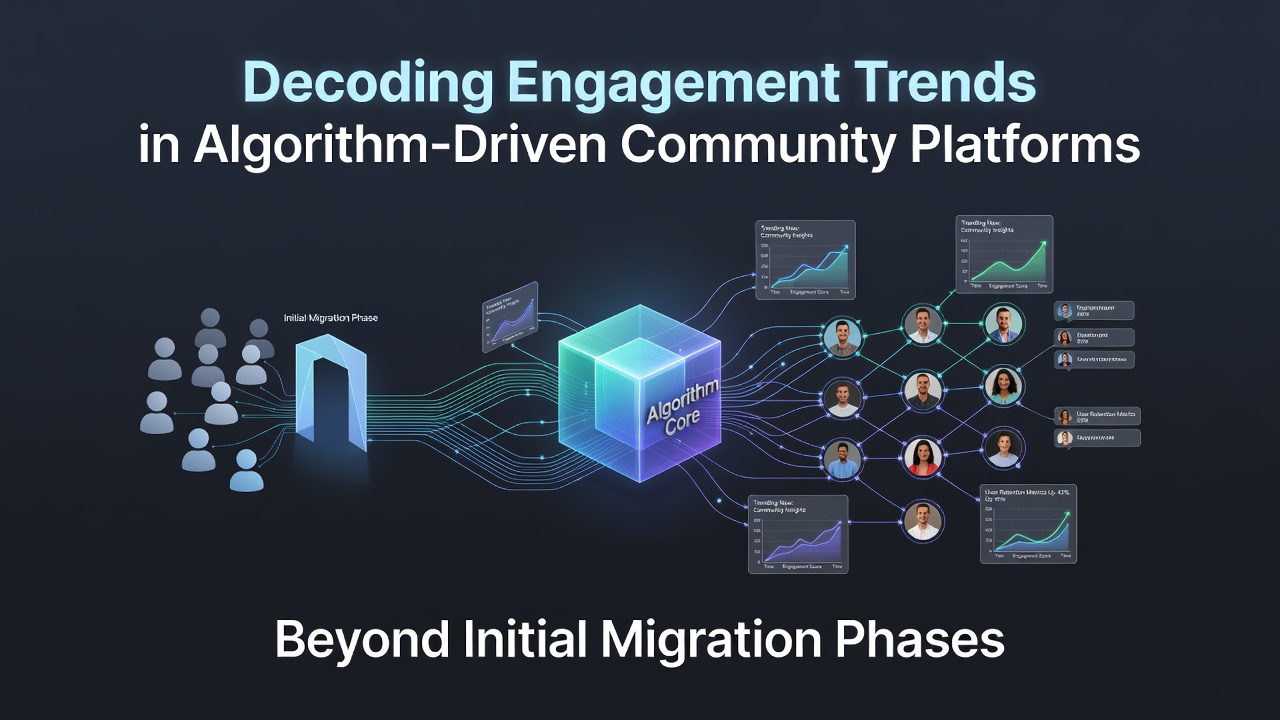
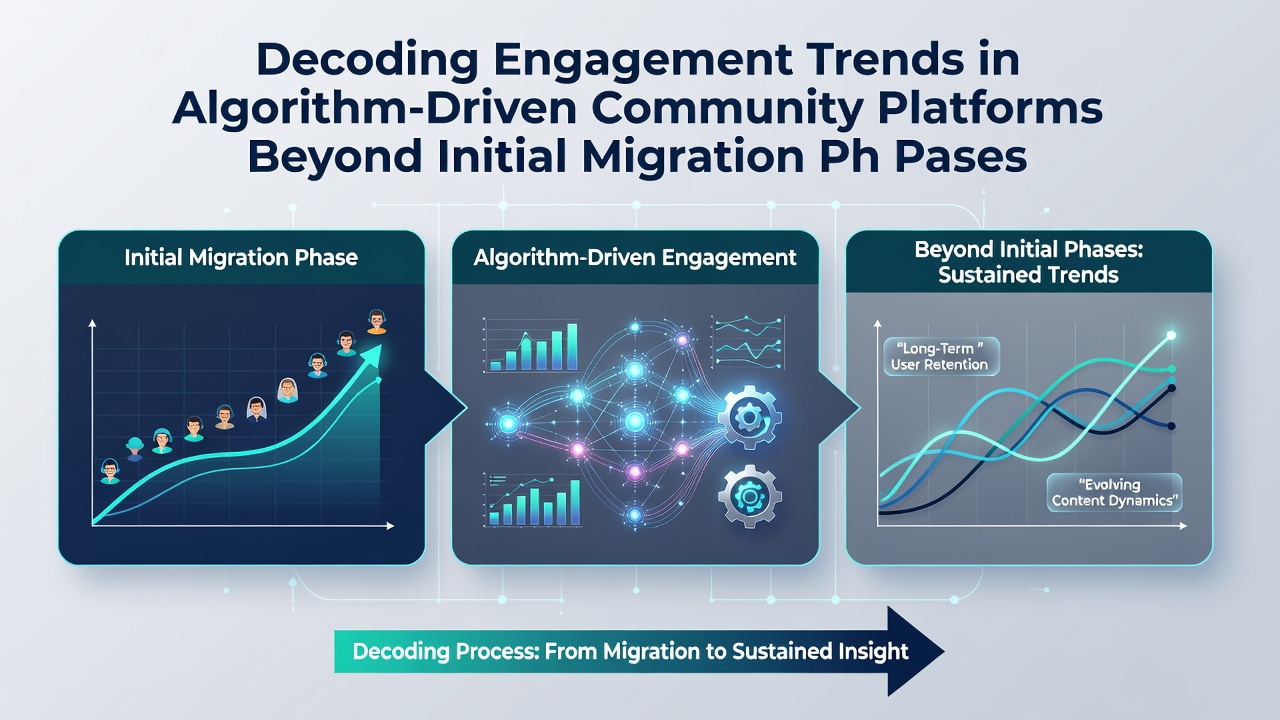
Community platforms that rely on algorithmic recommendations often experience distinct shifts once the initial migration excitement settles, and observers note that these changes become particularly measurable by October 2026. Data collected during that period shows sustained user activity depends on how platforms adjust content delivery after the first six months of relocation from legacy systems. Researchers tracking multiple networks report that early spikes in participation frequently give way to steadier patterns shaped by refined ranking mechanisms rather than novelty alone.
Platform Migration and Subsequent Behavioral Patterns
Migration events bring large groups of users into new environments where algorithms must learn preferences quickly, yet experts tracking these transitions find that retention rates stabilize only after systems incorporate longitudinal interaction data. One study released by the European Commission in late 2025 examined over 200 platforms and found that average session durations dropped by 18 percent once migration-related notifications ceased. Those same platforms saw recovery when algorithms began prioritizing content from long-term members over newly imported material. The reality is that users who remain active beyond the three-month mark tend to engage more with threaded discussions than with broadcast-style posts, a pattern confirmed across networks operating in both North American and Asia-Pacific regions.
Algorithm Adjustments After the First Migration Wave
Once the bulk of accounts have transferred, platform operators typically recalibrate their recommendation engines to reduce emphasis on onboarding prompts. Figures from the Canadian Radio-television and Telecommunications Commission indicate that networks implementing such recalibrations in early 2026 recorded a 12 percent rise in repeat daily visits compared with those that maintained aggressive migration messaging. The shift allows algorithms to surface older but still relevant conversations, which in turn encourages deeper replies rather than quick reactions. Observers note that this adjustment phase often coincides with the introduction of new moderation layers designed to maintain discussion quality as volume grows.
Measuring Sustained Interaction Beyond Initial Adoption
Engagement metrics collected after migration phases commonly include reply depth, content creation frequency, and cross-thread navigation rates. Researchers at several academic institutions have developed frameworks that separate transient activity from habitual participation by analyzing timestamps spanning at least nine months. Their findings reveal that platforms achieving higher long-term retention tend to weight recency less heavily once user bases exceed 50,000 active accounts. Instead, connection strength between members becomes the dominant signal, leading to tighter clusters of interaction around shared interests.
Regional Variations in Post-Migration Retention
Platforms operating under different regulatory environments display noticeable differences in how engagement evolves. Networks based in jurisdictions with stricter data portability rules, such as those following Australian digital platform guidelines, often retain more diverse content formats after migration because users import richer media histories. In contrast, platforms facing lighter oversight sometimes see faster homogenization of activity as algorithms converge on popular formats. Data released by the Australian Communications and Media Authority in mid-2026 documented a 9 percent higher rate of multimedia contributions on platforms that preserved imported files intact compared with those that required re-uploads.
Role of Moderation Systems in Long-Term Activity
Moderation tools integrated into algorithmic feeds play a decisive part once initial migration activity fades. Platforms that deploy transparent appeal processes alongside automated flagging report steadier contribution levels, according to aggregated reports from multiple industry consortia. These systems prevent the accumulation of low-quality content that can otherwise suppress visibility of newer posts. Experts tracking moderation outcomes have observed that communities maintaining clear escalation paths experience fewer sharp drops in weekly active users during the nine-to-twelve-month window after migration completes.
Conclusion
Trends observed through October 2026 demonstrate that engagement in algorithm-driven community platforms stabilizes when recommendation systems shift focus from migration support to ongoing member connections. Metrics tracked across regions show consistent patterns once platforms move past the first wave of onboarding and refine their ranking logic accordingly. Continued monitoring by regulatory bodies and research groups will clarify how these dynamics evolve as networks mature further beyond initial relocation events.