
Theo Hoffmann · 14 September 2026
Analyzing Shifts in Search Result Rankings Following Major Platform Migrations
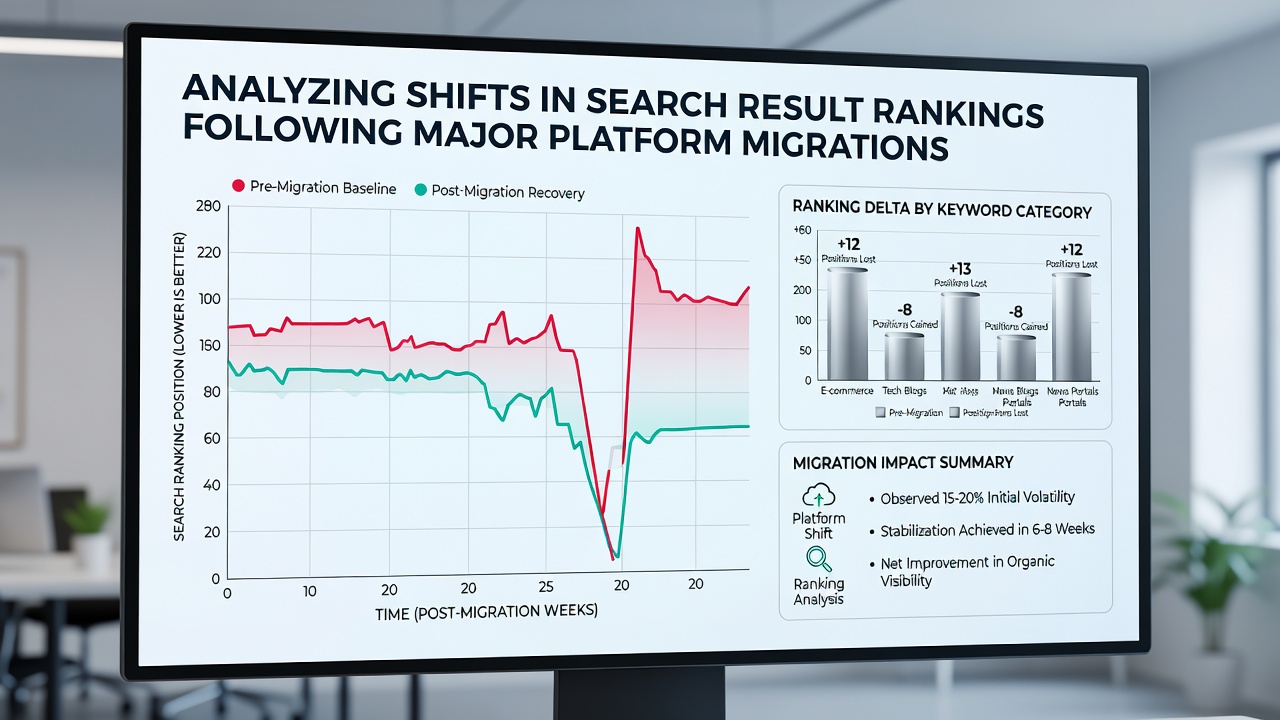
Platform migrations often trigger measurable changes in search result rankings because search engines re-evaluate site architecture, content signals, and technical performance during the transition period. Researchers at various institutions track these movements by comparing pre-migration and post-migration data sets, noting that shifts typically appear within days yet stabilize over several weeks depending on crawl frequency and index updates. Data from the Australian Competition and Consumer Commission indicates that large-scale website platform changes can alter visibility patterns when URL structures, server configurations, or content delivery networks undergo simultaneous revision. Those who monitor these events frequently observe temporary drops followed by partial recoveries once proper redirects and sitemap submissions take effect.Technical Factors Driving Ranking Movement
URL restructuring represents one primary catalyst for ranking shifts because search engines must process new paths and reassign authority signals. When teams implement 301 redirects incorrectly or in bulk, indexation gaps emerge and pages drop from results until the system reconciles the changes. Observers note that server response times and mobile rendering quality also influence outcomes, since algorithms weigh these elements heavily during re-crawling phases.
Content migration introduces additional variables when metadata, internal linking, and structured data fail to transfer intact. Studies conducted by academic groups in Canada reveal that missing schema markup or altered heading hierarchies correlate with ranking volatility across multiple verticals. The reality is that even minor discrepancies in canonical tags can fragment authority and delay full recovery.
Case Examples from Recent Transitions
Take one enterprise that completed a full CMS migration in early 2025 and recorded a 28 percent decline in impressions for high-volume keywords within the first ten days. Analysts using Search Console data traced the drop to incomplete redirect chains and slow image optimization on the new platform. Recovery occurred gradually after the team resubmitted updated sitemaps and corrected crawl errors flagged by automated tools.
Another instance involved a regional news outlet that shifted from a legacy hosting environment to a cloud-based infrastructure during the same year. Figures released by industry monitoring services showed organic traffic stabilizing only after the site passed core web vitals thresholds consistently for four consecutive weeks. Those tracking similar moves report that sites maintaining consistent content freshness signals tend to regain positions faster than those that pause publishing during the switch.
Monitoring and Measurement Approaches
Experts recommend establishing baseline metrics at least thirty days before any migration begins so that subsequent deviations stand out clearly against normal fluctuations. Tools that capture daily ranking snapshots, crawl volume, and backlink acquisition patterns provide the granularity needed to isolate migration effects from algorithm updates. Research indicates that combining multiple data sources yields more reliable conclusions than relying on single-platform analytics alone.
September 2026 brings additional complexity because several major search engines plan to refine their rendering pipelines, which may amplify or dampen ranking shifts for sites undergoing platform changes around that timeframe. Organizations preparing migrations in advance are already testing accelerated mobile pages and server-side rendering configurations to align with anticipated evaluation criteria.
Recovery Patterns and Timeline Expectations
Recovery timelines vary according to site size, crawl priority, and the thoroughness of technical audits performed post-migration. Smaller sites often see stabilization within two to three weeks, while enterprise domains with millions of URLs require extended periods for complete re-indexation. Evidence suggests that proactive communication with search engines through updated robots.txt files and verification in webmaster tools accelerates the process.
Those who have studied dozens of migrations note that sites preserving historical performance data and conducting parallel testing environments before launch encounter fewer prolonged disruptions. The writing's on the wall for unprepared transitions, yet methodical preparation consistently reduces the magnitude of ranking volatility observed across tracked cases.
Conclusion
Platform migrations continue to produce observable ranking shifts that organizations can quantify and manage through structured monitoring. Data shows that technical precision in redirects, content fidelity, and performance optimization directly influence both the severity and duration of any movement. As search systems evolve toward more sophisticated rendering and evaluation methods, the importance of pre-migration testing and post-migration verification grows correspondingly. Continued collection of empirical data from diverse geographic markets will refine understanding of these dynamics in the years ahead.